

Certify Online Nutrition Courses: Your Path To Mastering Nutrition
Our Nutrition Assistant AI Suite will transform your body. You will lose fat, get toned, and build muscle. Gain confidence and optimal health.
Choosing the right online nutrition courses can feel confusing at first. The good news is that you can start small, learn proven skills, and grow into deeper topics with steady progress. Programs from leading schools, including Stanford and Harvard, teach nutrition in clear steps and offer a certification path if you want career growth.
In the next sections, you will see how these classes fit busy schedules, use research-backed lessons, and offer budget-friendly options. Many learners use them to coach others or to guide healthier habits at home and in their community. A smart first step can change your direction in health and wellness.
Key Takeaways
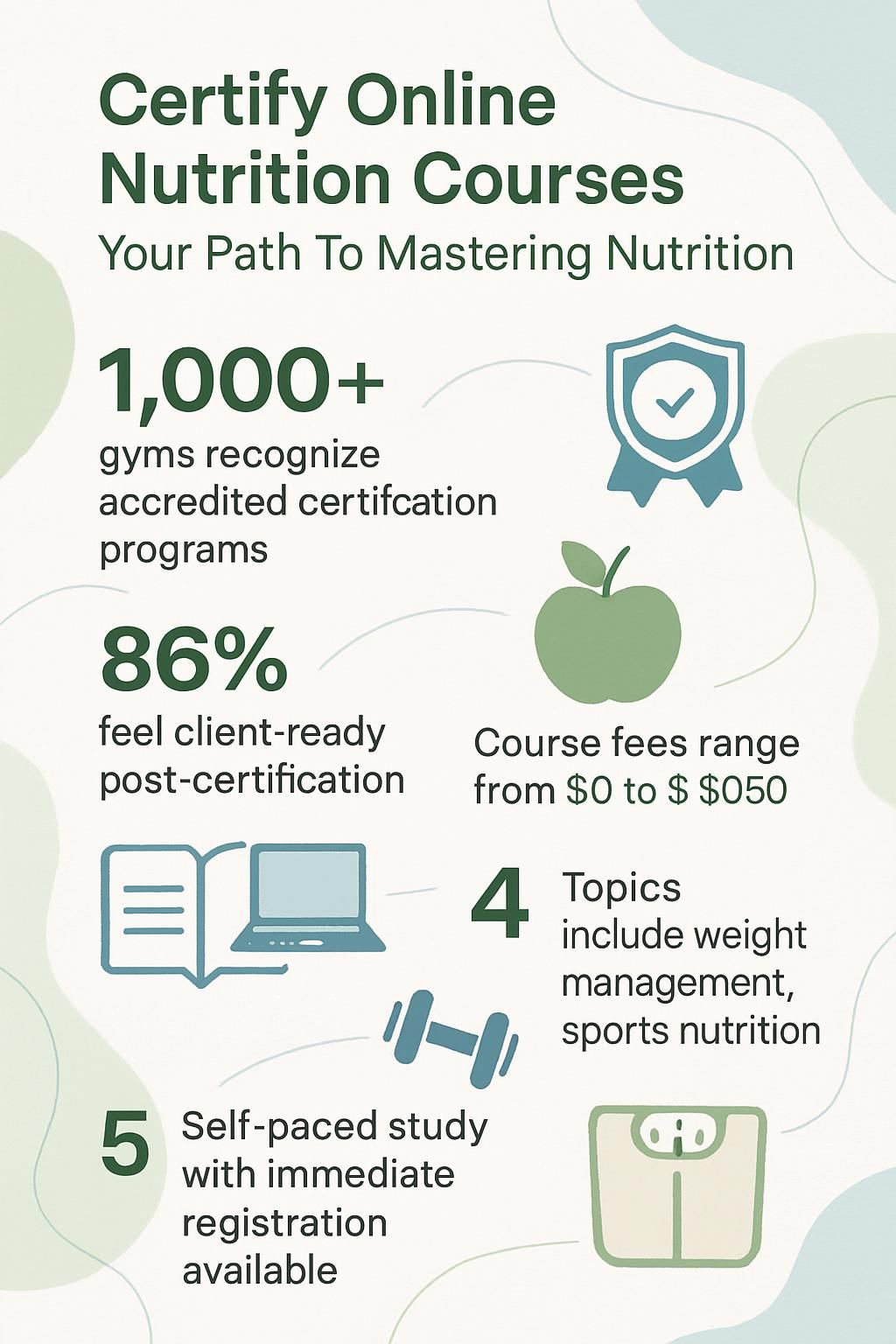
- Online nutrition courses from top universities like Harvard and Stanford are flexible and often affordable, with fees from $0 to $3,050.
- Accredited providers such as NASM are widely trusted, including by NFL, NBA, MLS, and MLB teams, and by more than 14,000 gyms worldwide.
- Certification can expand career options. NASM reports 86% of graduates feel client-ready and 96% are satisfied with their training.
- Common topics include weight management, sports nutrition, diabetes care, food safety, and sustainable diets, taught with evidence-based instruction.
- Many platforms offer self-paced study, immediate registration, and certificates for roles in fitness coaching, public health, or international nutrition work.
Benefits of Taking Online Nutrition Courses

Online nutrition courses give you practical tools to improve eating habits, exercise planning, and behavior change. You learn from home at your own pace, which helps you stick with the material and apply it right away.
How Do Online Nutrition Courses Offer Flexibility and Convenience?
Start dates are simple. You can enroll now, next week, or later in the year. Formats include in-person, blended, fully online, and live online sessions so you can match learning to your schedule.
Course lengths vary, from short guided projects to multi-week programs. On Coursera, personalized suggestions help you focus on your goals. I once completed a child nutrition module in under two hours after dinner, which kept my week on track. Many institutions allow anytime registration so you can begin when ready. NASM One keeps your credentials active without extra renewal fees, reducing surprises.
Where Can I Access Expert Nutrition Knowledge Online?
Trusted universities offer clear, science-based lessons. Options include Harvard, Stanford, Emory, the University of Copenhagen, Ludwig Maximilian University of Munich, and Case Western Reserve. Harvard’s T.H. Chan School of Public Health covers core diet topics, and Stanford offers specializations in mindful eating and food sustainability.
For a professional focus on sports nutrition, the National Academy of Sports Medicine, known as NASM, offers respected credentials. Global choices include courses on pregnancy nutrition from LMU Munich and health certificates from Pontificia Universidad Católica de Chile. Content often covers diet planning, diabetes management, calorie assessment, and healthy cooking, which supports both aspiring nutritionists and fitness coaches.
I took “Healthy Practices: Nutrition” with the University of Colorado System on Coursera. The self-paced format fit my routine and the lessons on whole grains and micronutrients were clear and practical.
What Are the Affordable Learning Options for Nutrition Courses?
There are options for every budget. Harvard’s short courses such as “6-WEEK PLAN FOR HEALTHY EATING” and “STARTING TO EXERCISE” cost about $30 each. Stanford’s “Stanford Introduction to Food and Health” and “Child Nutrition and Cooking” are free, which makes it easy to begin.
You can also find free courses from LMU Munich, the University of Copenhagen, and the University of Barcelona. Examples include “The New Nordic Diet – From Gastronomy to Health” and “Food Safety & Toxicology.” On Coursera, you will see both free classes and affordable degree paths. Certificates can range from no cost to $3,050, which allows you to match price with goals.
How Do Online Courses Provide Global Accessibility?
From your home, you can join classes from Stanford in the United States, the University of Copenhagen in Denmark, or the University of Barcelona in Spain. Many courses offer Spanish and other languages, which supports learners worldwide.
You enroll online, meet basic prerequisites, and complete all work without travel. NASM partners with more than 14,000 gyms and health clubs and reports work with every team in the NFL, NBA, MLS, and MLB. Certificates from Pontificia Universidad Católica de Chile and National Taiwan University are recognized in many countries. I finished a European nutrition course while living in the United States, which broadened my outlook and career ideas without changing my location.
Key Benefits of Earning a Certification in Nutrition
Earning a certification builds credibility and opens new learning paths. It can also raise your confidence with clients and employers.
How Can Certification Enhance My Career Opportunities?
NASM-credentialed professionals work across major sports. NASM reports their graduates serve teams in the NFL, NBA, MLS, and MLB, and are recognized by over 14,000 gyms. This recognition can lead to roles in fitness centers, sports teams, and healthcare settings.
After I completed a certificate, interview requests increased. Employers valued my evidence-based approach to diet and exercise planning for heart health. Program data show 86% of certified professionals feel ready for their first client. Tools in NASM One, such as EDGE Trainer Pro, also teach business skills for career growth.
Strong credentials can lead to leadership roles or help you educate others about macronutrients, vitamins, minerals, child and older adult nutrition, and weight strategies for athletes and active adults.
Why Is Certification Important for Credibility as a Nutrition Professional?
Certification signals knowledge grounded in science. Pro leagues like MLS, the NFL, the NBA, and MLB use certified staff who complete programs such as the NASM Nutrition Essentials Certificate. More than 1.5 million professionals have chosen NASM training.
Clients and employers want proof that you can plan a healthy diet and understand nutrition science and eating psychology. NASM reports a 96% learner satisfaction rate, which supports trust in your skills as a professional.
How Do Personalized Learning Paths Work in Nutrition Certification?
You can customize your journey. NASM One includes a CEU Library with over 350 courses and eight free specializations so you can deepen skills in diet planning, behavior change, or fat management. Coursera suggests classes based on your learning history, which keeps you on track.
Modular formats such as Specializations and Professional Certificates build skills step-by-step. If you plan to coach, EDGE Trainer Pro supports your business setup. Study in-person, online, or live online to match your learning style.
How Can Certification Help Me Stay Updated with Industry Trends?
Certification programs refresh content often, which helps you keep pace with new research. NASM One gives access to hundreds of current courses in nutrition science. Coursera regularly adds topics in diet and health, including food safety and group-specific guidelines.
NASM’s work with thousands of gyms helps keep lessons aligned with real practice. With eight free specializations included, you can continue learning without extra renewal fees. Alerts about new sports nutrition and public health standards helped me adjust client plans quickly.
Popular Topics Covered in Online Nutrition Courses
These topics help you answer common questions and apply nutrition in daily life. Think of it as a checklist you can use at home, at the gym, or with clients.
What Are the Fundamentals of Human Nutrition?
Your body uses six main nutrient groups: carbohydrates, proteins, fats, vitamins, minerals, and water. Carbohydrates fuel activity. Protein builds and repairs tissue and supports the immune system. Fats aid brain health and hormone balance.
Vitamins such as A, C, D, E, and K protect cells and support bones. Minerals like calcium and iron support bones and healthy blood. Stanford’s “Introduction to Food and Health” covers these basics at no cost. If you prefer Spanish content, the University of Barcelona offers free lessons on food groups and balanced eating.
How Does Weight Management and Diet Planning Work?
Weight management means choosing foods and habits that support a healthy weight over time. Emory University’s “Weight Management: Beyond Balancing Calories” teaches you to focus on nutrition quality, not just calorie counts. Harvard’s “LOSE WEIGHT AND KEEP IT OFF,” about two weeks long, offers evidence-based tactics for steady progress at $30.
Clear steps help. Set goals, track progress, and use reliable tools. Case Western Reserve University’s “Designing Your Personal Weight Loss Plan” walks you through building a plan you can follow. These programs explain meal timing, portion sizes, and nutrient balance so changes stick.
What Nutrition Is Recommended for Pregnancy, Children, and Seniors?
During pregnancy, folic acid, iron, calcium, vitamin D, and high-quality protein are key. LMU Munich’s “Nutrition and Lifestyle in Pregnancy” shows how to build balanced meals with these nutrients. Many clinicians recommend 600 micrograms of folic acid daily to help prevent birth defects.
Children need steady calories, protein, calcium, iron, and vitamins for growth. Stanford’s “Child Nutrition and Cooking” helps families plan meals with fruits, vegetables, grains, dairy, and lean meats. I began packing a fruit or veggie snack daily after taking this course. Older adults often need more vitamin D, vitamin B12, calcium, fiber, and fluids. The University of Pennsylvania’s “Vital Signs” helps monitor changes that may affect nutrition.
How Is Nutrition Applied in Sports and Fitness?
In training, food choices affect strength, energy, and recovery. Protein builds muscle. Carbohydrates provide quick and sustained fuel. Healthy fats support long sessions and overall wellness. NASM sets respected standards for sports nutrition. Pro teams in the NFL, NBA, MLS, and MLB work with staff who hold these credentials.
Courses like Harvard’s “STARTING TO EXERCISE” at $30 and the University of Colorado Boulder’s free “Science of Exercise” show how to match diet with workout goals. Many coaches use NASM One and EDGE Trainer Pro to track client meals and manage their business.
How Are Diabetes and Obesity Managed Through Nutrition?
Balanced eating plans help manage blood sugar and weight. Whole grains, lean protein, vegetables, fruits, and healthy fats are common building blocks. Harvard’s $30 course “Healthy Eating for Type 2 Diabetes” teaches practical strategies. Stanford’s free “Understanding Diabetes and Obesity” explains prevention and care approaches.
The University of Copenhagen offers two free programs, “Diabetes – A Global Challenge” and “Diabetes: The Essential Facts,” which cover prevention and everyday management. Major health groups like the American Diabetes Association provide guidance on carbohydrate intake and label reading. These steps can steady blood sugar and support weight goals.
What Should I Know About Food Safety and Sustainability?
Food safety reduces the risk of illness from contamination or poor storage. National Taiwan University’s “Food Safety & Toxicology” explains hazards and safe handling. Many programs also teach allergen labeling and proper temperatures so you can shop, store, and cook with confidence.
Sustainability means protecting the environment while meeting nutrition needs. Stanford’s “Food Sustainability, Mindful Eating, and Healthy Cooking” shows ways to cut waste and use local produce. The University of Copenhagen’s “New Nordic Diet” highlights eating patterns that support health and the planet. Certificates from Pontificia Universidad Católica de Chile and the University of Barcelona include sustainability in daily planning.
Top-Rated Online Nutrition Courses to Explore
These trusted picks are a strong starting point. Choose based on your goals, timeline, and budget.
What Is Stanford’s Introduction to Food and Health Course About?
Stanford’s “Introduction to Food and Health,” offered on Coursera, is free and beginner friendly. It covers essential nutrients, food groups, and how eating patterns affect disease risk. There are no prerequisites, so anyone can join.
The course uses current science and clear language. Practical examples make changes feel doable. After taking it, I found it easier to make small swaps at lunch and dinner.
What Does the Child Nutrition and Cooking Course Cover?
This free Stanford course explains children’s nutrition needs and how to encourage better habits. Video lessons and simple assignments help you plan balanced meals and shop with purpose, even with no prior background.
Experts share research on how early nutrition supports long-term health, including lower risks for obesity and heart disease. As a parent, I used the meal tips right away and saw better variety at home.
How Does the Weight Management: Beyond Balancing Calories Course Help?
Emory University’s course shows why quality matters more than counting every calorie. You explore energy balance, hormones, sleep, and long-term strategies that work in daily life.
Lessons are interactive and research based. I learned how sleep patterns affected my hunger, which changed my evening routine. The course is suitable for beginners and professionals alike.
What Is the New Nordic Diet: From Gastronomy to Health Course?
The University of Copenhagen offers this free English-language course on the New Nordic Diet. It explains the science, culinary roots, and health benefits of eating local, seasonal foods.
Video lessons and hands-on tasks help you apply ideas in your kitchen. Many learners use it to explore sustainable patterns without paying enrollment fees.
What Are the Healthy Practices in Nutrition, Physical Activity, and Community Engagement?
The University of Colorado System’s free course shows how smart eating and activity support families and communities. Interactive assignments and group work make it practical and engaging.
No prerequisites are required. You learn how community projects can encourage healthy routines that last.
Accredited Certificates for Nutrition Professionals
Accredited certificates show employers and clients that you meet a clear standard. They can also help you specialize without pausing your current work.
What Does the National Academy of Sports Medicine Nutrition Essentials Certificate Include?
The NASM Nutrition Essentials Certificate provides evidence-based training respected by pro teams. NASM reports that 91% of NHL teams, 92% of WNBA teams, and 86% of NWSL teams use NASM-credentialed professionals. NASM One includes a CEU Library with more than 350 courses and eight free specializations.
Learner reports show 96% satisfaction and 86% feel ready to work with clients. For many, this certificate opens doors to roles in fitness, coaching, and health education.
What Is Covered in the Science of Diet and Exercise Certification?
The University of Colorado Boulder offers a free course on the science behind diet and exercise. You learn how nutrients fuel movement, how food affects energy, and which fitness routines are supported by research.
Assignments turn lessons into everyday habits. There are no prerequisites, which makes it accessible for new learners and aspiring professionals.
What Are Global Nutrition and Health Certificate Options?
If you want a global focus, consider these options. Pontificia Universidad Católica de Chile offers health-related certificates recognized internationally. The University of Copenhagen provides free diabetes courses with certificates.
The University of Edinburgh’s “Understanding Obesity” is a free option that explores evidence-based strategies. The University of Barcelona offers Spanish-language learning for special situations, such as long sea travel. National Taiwan University’s “Food Safety & Toxicology” covers international safety issues. Many programs provide content in multiple languages and are fully online.
Tips for Choosing the Right Online Nutrition Course
Use a simple checklist to compare programs. Clear goals, accreditation, and fit with your schedule matter most.
How Do I Identify My Goals and Interests for Nutrition Courses?
Start with a short list. Are you most interested in child nutrition, mindful eating, or fitness coaching? Read course descriptions to see whether topics match your goals, such as senior nutrition or diabetes care.
Set specific objectives. If you seek career growth, pick courses that include a recognized certificate. I began with short intros to human nutrition, then moved into advanced classes that matched my clients’ needs at work.
How Can I Verify Accreditation and Certification Options?
Check each course page for accreditation and certificate details. Universities like Harvard, Stanford, and the University of Copenhagen post this information clearly. Many learners also verify credibility through reviews and student outcomes.
Employers often recognize certifications from organizations such as NASM, a widely respected brand in nutrition education. Always confirm whether a course grants a certificate at completion.
What Should I Look for in Course Content and Duration?
Review the outline. Core topics like health and medicine, nutrition for fitness, and behavior change should appear if those match your aims. Choose an appropriate level, whether introductory, intermediate, or advanced.
Time matters. Courses range from a few hours to 12 weeks or more. Some start immediately, while others have set dates. I chose a self-paced format during a busy semester and still finished all tasks on time.
How Do I Check for Flexibility and Self-Paced Learning Options?
Look for self-paced options and note course length. Many programs allow you to pause and resume, which supports a busy life. Check registration windows. Some let you enroll and begin the same day.
Review the delivery method. Fully online options allow the most flexibility, while live sessions add structure. A colleague chose a program that let her slow down during peak work weeks, then speed up later.
Where Can I Find Reviews and Testimonials from Past Learners?
Most platforms show star ratings and written reviews under each course. You can also read discussions on forums such as Reddit or Quora and browse social groups focused on nutrition learning.
I compared the course page with third-party reviews before enrolling. The feedback shaped my expectations about instructor support and workload.
Career Opportunities After Certification
A certificate can open doors in clinics, gyms, schools, and community programs. It can also help you build a private practice as a coach.
How Do I Become a Certified Nutritionist or Dietitian?
First, earn a bachelor’s degree in nutrition, dietetics, or a related field that meets accreditation rules. Then complete a supervised practice program known as a dietetic internship, often 1,200 hours or more. After that, pass the national exam from the Commission on Dietetic Registration.
Many states also require a license or state-level credential to practice. Check your local rules. Online courses can prepare you for exams and count toward continuing education. I chose an accredited online track that fit around work, which helped me build practical skills while studying for my exam.
What Are the Opportunities in Coaching for Weight Loss and Wellness?
Coaches guide clients through behavior change and structured plans. Online courses teach goal setting, habit tracking, and safe techniques for weight loss. Earning a respected certificate, including from NASM, can raise your credibility and job options.
Interest in weight management training has grown. Many learners now work in gyms, clinics, or private practice, helping clients reach realistic goals with steady progress.
How Can I Work in Sports and Fitness Nutrition?
Start with a recognized program that covers athlete fueling and recovery strategies. NASM reports training more than 1.5 million professionals, and pro teams in leagues like the NFL, MLS, and MLB retain NASM-credentialed specialists.
Complete a certificate such as NASM Nutrition Essentials. Use NASM One for continuing education and discounts on future courses. I found the step-by-step modules easy to apply with clients in both youth sports and local gyms.
How Do I Develop Personalized Diet Plans for Clients?
Begin with a full intake assessment. Collect age, sex, weight, medical history, medications, food preferences, and activity level. Use evidence-based guidelines to estimate energy and nutrient needs.
Set goals, choose macronutrient targets, and build meal plans that match culture, budget, and taste. Check progress at regular intervals and adjust based on health changes, lab results, and feedback.
How Can I Contribute to Public Health Programs?
Nutrition skills can support larger groups through workshops, school lessons, and community events. You might volunteer with local health departments, faith groups, or parks programs.
I helped coordinate a free summer meal project in my city. Parents learned simple recipes while kids enjoyed nutritious lunches. Credentials add credibility as you advocate for healthier school meals and food access.
How Online Nutrition Courses Transform Lives
Small changes add up. The right course helps you turn science into everyday choices that stick.
How Do These Courses Promote Healthier Lifestyle Choices?
Structured lessons teach you how to build a healthy plate, plan weekly meals, and manage conditions like diabetes or obesity. Many programs are affordable, which keeps learning accessible.
Skills such as food label reading, portion planning, and safe cooking can make daily decisions simpler. After one course, you might meal prep on Sundays or swap sugar-sweetened drinks for water and fruit.
How Do They Empower Communities with Nutrition Education?
Evidence-based guides help you explain nutrition without jargon. Downloadable worksheets and simple visuals make it easier to teach friends, neighbors, or youth groups.
I used class materials to host a healthy cooking night in my building. Attendees learned to read labels and plan balanced meals. Several families began repeating the recipes the next week.
How Can Nutrition Knowledge Help Combat Global Health Challenges?
Courses from schools like Stanford and Harvard take on issues such as diabetes, heart disease, and obesity. They equip you to apply proven strategies in homes, clinics, and community programs. A certification from NASM can help you design safe, effective plans at scale.
For credibility, review guidance from authorities like the Centers for Disease Control and Prevention and the World Health Organization. If you have a medical condition, speak with your healthcare provider before making major changes.
Conclusion
Online nutrition courses offer flexible learning, current science, and clear steps you can use right away. Programs from top schools cover essentials like healthy eating, exercise science, food safety, sustainability, and weight management. Many also provide a path to certification if you want to work in coaching, fitness, or public health.
Choose a course that fits your goals and schedule, then practice the skills you learn. The knowledge you gain can improve daily choices, support your family, and help your community. This is a practical way to build confidence and move forward in nutrition and wellness.
Health disclaimer: This guide is for education only. It does not replace medical advice. Always consult a qualified professional for diagnosis, treatment, or personalized nutrition care.
FAQs
1. What are the benefits of enrolling in certify online nutrition courses?
Certify online nutrition courses offer structured learning, evidence-based content, and flexible schedules. These programs help you master essential topics such as dietary guidelines, nutrient functions, and meal planning. Many learners report improved confidence when applying nutritional knowledge to real-life situations.
2. How do I know if an online nutrition course is credible?
Look for programs accredited by recognized organizations or universities. Check if instructors hold valid credentials in dietetics or health sciences. Reliable courses often cite peer-reviewed studies and present data from trusted sources like the Centers for Disease Control and Prevention or the World Health Organization.
3. What topics can I expect to learn in a certified online nutrition program?
Most certified programs cover macronutrients, micronutrients, food safety principles, weight management strategies, and chronic disease prevention through diet. Some also include modules on reading food labels and understanding current research trends in human health.
4. Can completing an online nutrition course improve my career prospects?
Completing a certified program demonstrates your commitment to professional growth; it may qualify you for roles in wellness coaching or community education settings where foundational knowledge of healthy eating is valued.
Summary: Certified online nutrition courses provide reliable information backed by science; they teach practical skills relevant to both personal well-being and career advancement opportunities within health-focused fields.