

Best Medical Weight Loss Clinic Near Me For Effective Weight Management
Our Nutrition Assistant AI Suite will transform your body. You will lose fat, get toned, and build muscle. Gain confidence and optimal health.
Struggling to lose weight or keep it off can feel exhausting. Medical weight loss programs use science, trained clinicians, and coaching to make progress safer and more consistent than fad diets. Research from the National Institutes of Health shows that supervised care improves long-term weight management compared with going it alone.
This guide to Medical Weight Loss Near Me explains how a medical weight management program personalizes care for your unique needs. You get expert support, appropriate medication if needed, and tools to build lasting habits. That combination can raise your chances of success while protecting your health.
Keep reading to find a clinic that fits your goals and daily life.
Key Takeaways
- Medical weight loss clinics, including Cleveland Clinic and Vayda Medical Weight Loss, use evidence-based care such as GLP-1 medication to support safe, supervised weight management.
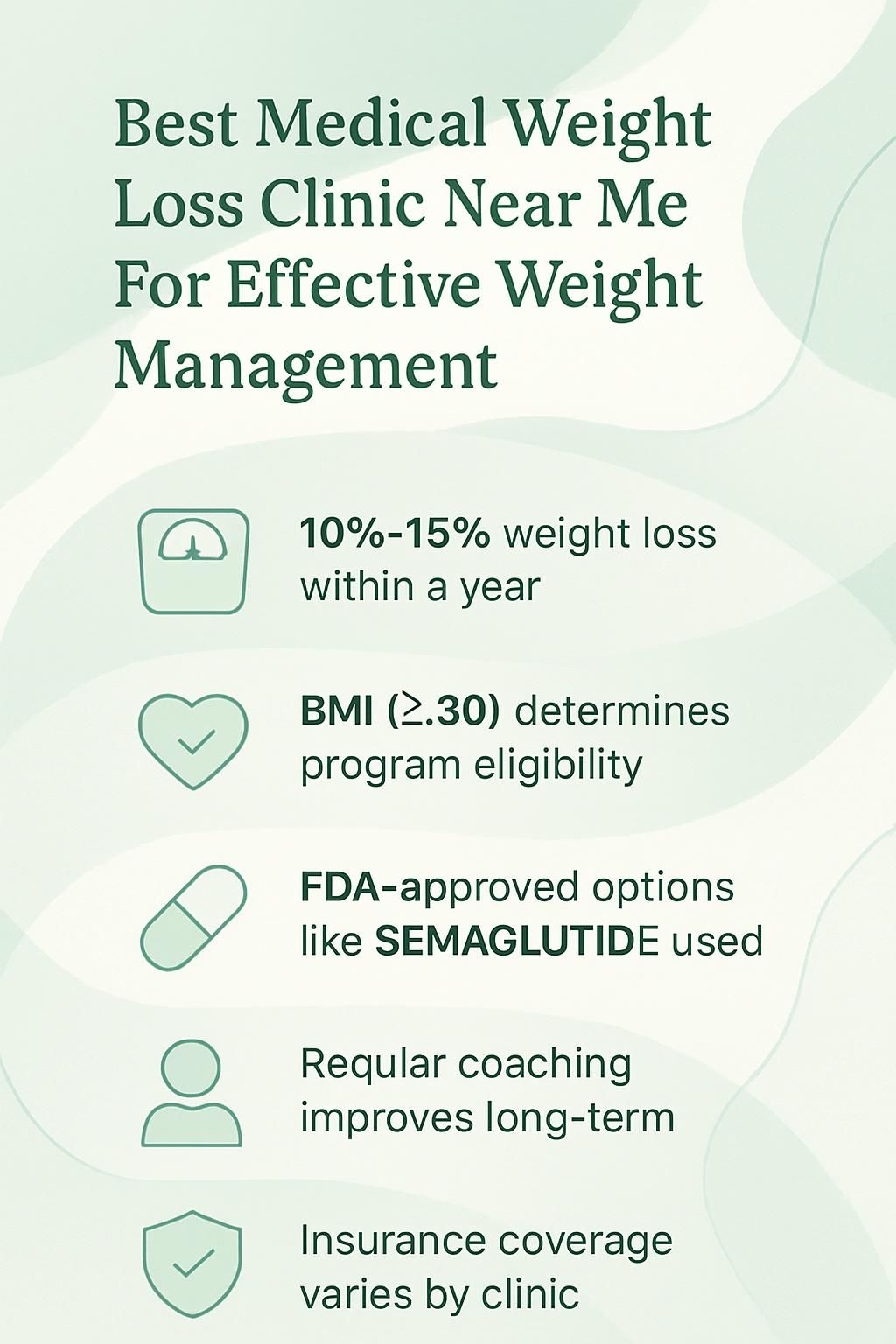
- Many patients lose about 10 to 15 percent of body weight within a year when programs combine nutrition counseling, prescription options, and behavioral coaching.
- Clinics check eligibility through BMI, 30 or higher, and medical history before offering FDA-approved options like semaglutide or other non-surgical alternatives.
- Regular visits, skilled coaching, and team-based care from doctors and dietitians improve accountability and long-term results compared with unsupervised dieting.
- Insurance coverage varies. Confirm accepted plans and costs at clinics such as Abundant Life Healthcare or Steel City Medical Center before you start.
What Are Medical Weight Loss Clinics?

Medical weight loss clinics help you lose weight under the guidance of licensed health professionals. Teams often include doctors, nurse practitioners, dietitians, and psychologists who focus on obesity medicine, the medical field that treats excess weight and related conditions.
Your clinician reviews your medical history, current medicines, blood pressure, and lab work. This information guides a complete weight management plan built around your goals, lifestyle, and risks.
Your first visit covers eating patterns, activity, sleep, and personal targets. If your body mass index, BMI, is 30 or higher, you may qualify for FDA-approved weight loss medications or structured non-surgical options such as meal planning or behavioral therapy.
In my local program, steady check-ins with the physician and a registered nurse kept me accountable and encouraged. Clinics also address related problems like diabetes or high cholesterol while aiming for steady, sustainable results through supervised methods, not quick fixes.
Benefits of Medical Weight Loss Clinics
Medical weight loss clinics give you access to a coordinated care team that uses evidence-based medicine. Plans are personalized to your health conditions and goals, which supports both safety and progress.
How Do Supervised Weight Loss Programs Work?
Doctors and specialists oversee your plan and help you manage cravings, overeating, and conditions like type 2 diabetes, high blood pressure, or heart disease. GLP-1 drugs, such as Wegovy, may be used. GLP-1 medicines mimic a natural gut hormone to reduce hunger and support blood sugar control.
Your plan can include a calorie deficit, practical exercise routines, and regular visits. At appointments, you track weight, review challenges, and adjust next steps. Lab tests and health screenings help protect safety while your team fine-tunes the program.
Plans are customized to your metabolic profile and medical needs. If you have sleep apnea, joint pain, or inflammation, your provider builds a plan that addresses those issues too. Weekly check-ins create strong accountability, which improves consistency and results.
Clinics also prepare you to handle medication side effects like nausea or constipation and offer resilience coaching to prevent backsliding.
Supervised programs give you the structure and support necessary for sustainable results, making every step of your weight loss journey safer and more effective.
What Are Personalized Weight Loss Strategies?
Your journey starts with an in-depth consultation. The team reviews your diet, activity, sleep, stress, and weight-loss goals. Lab work may include blood sugar, cholesterol, and hormones like leptin, which helps control appetite.
Clinics build a plan based on your starting weight, goal weight, and medical needs. Approaches can include GLP-1 medications, appetite suppressants, or meal structure. You might get nutrition coaching from a registered dietitian, plus activity guidance and counseling for emotional eating.
Progress is tracked at regular follow-ups. A friend of mine lost 30 pounds at Vayda Medical Weight Loss with food changes and weekly nurse visits to review choices and activity. That level of support addresses the root causes of weight gain, not just the scale.
Which Medications Help with Weight Management?
Some patients benefit from prescription medication under medical supervision. These medicines can lower appetite, support energy, and improve metabolism. Semaglutide, a GLP-1 therapy, is one option with strong evidence from clinical trials, including research published in JAMA.
Clinicians start with a low dose and increase slowly, a process called titration, to improve comfort and safety. Programs like those at Abundant Life Healthcare offer semaglutide injections alongside nutrition and activity plans. Medication works best as part of a complete program, not as a stand-alone tool.
During my clinic experience, many patients combined GLP-1 therapy with guided nutrition and kept more weight off over time. Close monitoring helps manage side effects and supports steady progress.
How Does Team Support Aid Weight Loss?
Medication can help with appetite, but long-term success often comes from a coordinated team. Clinics pair you with doctors, nutritionists, psychologists, and exercise coaches. Each person plays a role in building lasting habits.
Regular check-ins add structure and accountability. Nutrition counseling guides daily food choices. Therapy sessions teach stress skills and reduce emotional eating. If your job is stressful, a therapist can help you build coping strategies so stress does not trigger overeating.
Weekly meetings at my Kaiser Permanente medical group kept me focused and supported. That structure made it easier to recover after a tough week and keep moving forward.
What Are Sustainable Weight Loss Techniques?
Programs centered on lifestyle change create results you can maintain. You learn portion control and how to choose whole foods. Exercise coaching helps you burn calories, protect muscle, and keep metabolism active.
Research shows diet plus regular physical activity beats dieting alone for long-term weight control, CDC and NIH. Counseling supports behavior change so routines stick. Stress management training can reduce emotional eating.
Long-term success depends on consistent habits. Personalized plans adapt when progress slows. Ongoing support keeps you accountable. People who stay connected to a program are more likely to keep weight off after one year. Lower risks for heart disease, diabetes, and some cancers are added benefits.
Factors to Consider When Choosing a Medical Weight Loss Clinic
Selecting a clinic takes research. Aim for a place that fits your needs, offers a clear plan, and supports you with experienced staff.
How Important Is Clinic Location and Accessibility?
Location and access are key. A clinic near home or work saves time and improves consistency. Missed visits slow momentum.
Centered Primary Care at 966 Park Street, Suite B6 in Stoughton, MA serves nearby towns such as Avon, Canton, Walpole, Easton, and Abington. Abundant Life Healthcare is at 601A Professional Drive in Lawrenceville and serves Suwanee and Loganville. Steel City Medical Center is in Pittsburgh, PA.
Convenience helps you stick with follow-ups, nutrition coaching, or obesity treatment, whether you choose non-surgical options or consider procedures like a gastric balloon or bariatric surgery consult. I once switched to a closer clinic and made every visit, which sped up my progress.
Why Are Clinic Reputation and Patient Reviews Crucial?
Easy access is helpful, yet reputation matters too. Steel City Medical Center is known for supportive care and patient wins. Reviews can show how a clinic handles comfort, privacy, and sensitive conversations about metabolic health.
Personal stories reveal more than ads or fee-for-service price sheets. I once picked a program after reading about steady results using evidence-based tools like prescription medication and skilled coaching under physician supervision.
Look for clinics with clear testimonials and transparent feedback. Many also support HSA reimbursement and open discussion of all available weight-loss options.
What Weight Loss Services Should a Clinic Offer?
Choose a clinic that offers a full set of services. Centered Primary Care provides primary care, chronic pain care, mental health support, weight loss injections, and chronic disease management.
Abundant Life Healthcare includes obstetrics, gynecology, hormone therapy, fat freeze treatments, and body contouring. Steel City Medical Center offers wellness services such as hormone therapy and mental health support. A strong clinic also teaches prevention and health education so you can manage weight long-term.
For effective weight management, ask about GLP-1 therapy, semaglutide access, and other FDA-approved medicines. Telehealth is helpful if transportation is hard. Some clinics also advise on gastric bypass or other surgical routes when appropriate.
How Do Insurance and Costs Affect Your Choice?
Insurance can shape your options. Clinics like Abundant Life Healthcare share billing and coverage details on their sites. Plans differ. Some cover medications or supervised programs, while others do not.
Program costs vary based on length and included services. Many supervised programs run for several months to build lasting habits. Ask the clinic if they accept your insurance and request a clear estimate. For life-threatening emergencies, call 911 instead of relying on clinic services.
What Are the Top Medical Weight Loss Clinics Near Me?
Several clinics provide expert care and structured support. Explore the options near you and choose the approach that fits your needs.
What Does Vayda Medical Weight Loss Offer in the Mahoning Valley?
Vayda Medical Weight Loss offers supervised care that adapts to your personal goals. The team builds a plan to manage conditions such as high blood pressure or diabetes while you work on losing weight.
Expect regular check-ins, nutrition guidance, and prescription options if needed. Many patients like that the plan changes as they progress, not a one-size-fits-all template. That flexible approach can keep you motivated after setbacks.
How Does Weight Management Work at St. Joseph Warren Hospital?
At St. Joseph Warren Hospital, a coordinated team guides your journey. Physicians, nurses, and dietitians design a plan to match your medical needs and lifestyle.
A registered dietitian may help with meal planning and portions. Doctors may prescribe FDA-approved medication when appropriate. Follow-up visits track cholesterol, blood sugar, and blood pressure so adjustments stay safe and effective.
Staff encourage realistic goals and steady routines. With ongoing guidance, you build habits that last.
What Services Does Southwoods Health Provide for Weight Management?
Southwoods Health gives you access to medical professionals who create supervised weight management plans. Appointments may include medical assessments, lab work, and body composition review.
Behavioral support is part of the program. Counseling sessions address emotional eating and goal setting. Some patients qualify for prescription weight-loss medication with close monitoring.
Last year, I joined a local weight group with regular check-ins. Simple tools and goal tracking kept me engaged and on plan. Many patients see the same benefits at Southwoods Health.
What Are Elevation Medical Weight Loss Plans?
Elevation Medical Weight Loss offers plans directed by board-certified providers. You meet with clinicians who monitor your health, track progress, and shape strategies that fit your life.
Programs often include prescription medicine, nutrition counseling, and frequent visits. Structured tools and supportive coaching raise the odds of real, steady results.
What Programs Does AHN Bariatric and Metabolic Institute Provide?
AHN Bariatric and Metabolic Institute provides both surgical and non-surgical programs. The team includes physicians, dietitians, nurses, psychologists, and fitness experts who personalize each plan.
Surgical choices can include gastric bypass or sleeve gastrectomy. Non-surgical care may feature nutrition counseling, activity guidance, behavioral support, follow-ups, and medication management. The goal is safe, steady weight loss with durable habits.
How Does Cleveland Clinic Support Obesity and Weight Loss?
Cleveland Clinic uses a complete approach to obesity care. Doctors, dietitians, and behavioral therapists develop a plan based on your health, lifestyle, and goals.
Medical management can include FDA-approved medications and close follow-up. Group classes, support sessions, and nutrition counseling are often available. Eligible patients may be evaluated for bariatric surgery as well.
For non-surgical paths, specialists guide medical meal plans and supervised programs. Regular checks and feedback help you adjust and stay motivated.
What Are Non-Surgical Alternatives for Weight Loss?
Non-surgical paths offer effective options with less risk and more flexibility. These approaches work best with consistent follow-up and a clear plan.
How Can Dietary Guidance and Nutrition Help?
Nutrition guidance is the backbone of most medical weight programs. You learn balanced meal planning, smarter portions, and how to manage calories without feeling deprived.
A registered dietitian tailors meal plans to your health needs. Many plans range from 1,200 to 1,800 calories per day, depending on your history and targets. Plans evolve as your health improves.
Patients who follow structured eating plans usually lose more weight than those without nutrition support, CDC and NIH data suggest. Medication, if used, works better with a strong food plan.
What Prescription Weight Loss Drugs Are Available?
Several prescription options may help. Semaglutide, a GLP-1 therapy, reduces appetite and improves blood sugar control. Other FDA-approved choices may suppress hunger or support energy.
Your clinician reviews your history, then starts with a low dose and increases slowly to enhance comfort and safety. Nurses monitor progress and adjust as needed. Clear education about benefits and risks helps you know what to expect.
How Does Behavioral Support and Lifestyle Coaching Work?
Behavioral support turns good intentions into daily habits. Coaching addresses emotional eating, stress snacking, and motivation dips. Regular counseling offers strategies for tough weeks.
Therapists teach stress management, goal setting, and problem solving so setbacks feel manageable. At an Ohio clinic, weekly coach visits helped me spot patterns that fueled overeating after work stress. Those insights made a quick difference.
Many clinics combine therapy with medication and nutrition support. Integrated care improves success rates, according to the Obesity Medicine Association, 2023.
What Is GLP-1 Treatment for Weight Management?
GLP-1 treatment uses prescription medicine to reduce appetite and support metabolism. At Abundant Life Healthcare, physicians may include GLP-1 therapy as part of a medical weight loss program.
These medicines affect hunger hormones, helping you feel full sooner and lowering cravings. Doctors tailor the plan to your health profile and monitor progress closely.
In my experience with GLP-1 therapy, regular check-ins kept me motivated and safe. Many patients see steady results when GLP-1 treatment is combined with nutrition changes and physical activity.
What Are Some Success Stories in Medical Weight Loss?
Many people reach their goals with medical support. Real stories can help you see what steady progress looks like in daily life.
What Are Examples of Patient Transformations?
- John, a 45-year-old teacher, lost 45 pounds in five months at Vayda Medical Weight Loss. He had more energy and played with his kids with ease.
- Maria joined a supervised plan at St. Joseph Warren Hospital. She lost 12 percent of her weight in three months with GLP-1 medication and nutrition support. Her blood sugar steadied and her mood improved.
- After starting at Southwoods Health, David dropped over 30 pounds in four months. A structured exercise and meal plan boosted his mobility, and daily walks felt comfortable.
- An Elevation Medical Weight Loss patient lost 25 pounds in six weeks with coaching and medication. Sleep quality and energy rose, which helped at work and home.
- Samantha achieved a 10 percent weight loss in two months at AHN Bariatric and Metabolic Institute. Group support and lifestyle changes helped her maintain the results.
- At Cleveland Clinic, one patient shed 50 pounds in six months. With regular check-ins and medical advice, he returned to cycling after years away.
- I followed a supervised plan last year and lost 28 pounds in three months. My mood lifted and I had more energy for daily routines.
What Do Patients Say About Their Experiences?
- Patients value respectful, patient-centered care that keeps motivation high from visit to visit.
- Confidentiality and comfort matter, especially when discussing sensitive topics and health challenges.
- Trust grows with consistent, skilled staff support, and many people feel seen and heard.
- Personalized meal plans, activity coaching, and medical oversight are praised for driving lasting results.
- Frequent check-ins and encouragement help patients overcome plateaus and setbacks.
- Clinics such as Vayda Medical Weight Loss and Cleveland Clinic earn high marks for strong teams and clear guidance.
- Holistic programs teach habits like mindful eating and regular movement that continue after the program ends.
- Clear explanations of options, including GLP-1 injections, increase confidence and buy-in.
- Many report a 10 to 15 percent weight reduction within a year under supervision.
- Flexible scheduling, including virtual visits, makes care easier for busy lives.
How Do Patients Overcome Weight Loss Challenges?
- Book regular visits for accountability. Adjust your plan quickly if you stall.
- Use ongoing counseling during hard weeks. Skilled support helps you regain momentum.
- Apply behavioral therapy to reduce emotional eating and stress triggers.
- Lean on your care team for evidence-based choices that match your health goals.
- Track food, activity, and weight in an app or journal to spot patterns.
- Work with your provider to modify medication when needed and safe.
- Learn from success stories. Real examples make steady progress feel possible.
- Build sustainable habits like balanced meals and regular movement, not extreme dieting.
- Celebrate small wins such as lower blood pressure or fewer cravings to stay positive.
Medical weight loss clinics provide non-surgical options that support long-term management with structure and care.
How Can I Achieve Effective Weight Loss with a Clinic?
Partnering with a medical weight loss clinic gives you expert support, safe tools, and a plan you can follow. Small steps add up when they are consistent.
How Do I Set Achievable Weight Loss Goals?
Start with an initial consultation. Discuss your lifestyle, medical history, and goals. The team then sets specific, realistic targets based on your starting weight and how your body responds.
Many clinics suggest a first target of five to ten percent weight loss over six months. This range is safe and often improves health markers such as blood pressure and blood sugar.
Goals are broken into milestones so progress feels manageable. Tracking these wins with staff support helps you stay engaged and steady.
Why Is Following Medical Advice Important?
Following medical advice improves safety and results. Clinicians adjust medicines, nutrition, and exercise based on your progress and lab data.
People who follow structured medical guidance often maintain an extra 5 to 10 percent weight reduction compared with doing it alone, according to clinical guidance from major health systems. Professional oversight also lowers the risk of unsafe changes.
This article is educational and does not replace care from your own clinician.
What Types of Physical Activities Should I Do?
Exercise plans should match your abilities and schedule. Brisk walking for 30 minutes, five days each week, supports heart health and calorie burn. Add resistance training two to three days per week to protect muscle and support metabolism.
Swimming, cycling, yoga, or group classes can add variety, especially if joints are sore. Adults who do both aerobic and strength activities are more likely to keep weight off long-term, CDC 2023. Your clinic can help you choose safe activities and the right intensity.
How Can I Maintain a Positive Mental Approach?
Mental health drives consistency. Counseling teaches stress skills and helps you manage tough days without giving up. Research shows that regular behavioral support improves weight outcomes.
Clinic staff create a safe space to discuss body image and emotional eating. In my group sessions, hearing others share setbacks reminded me that progress is not a straight line, and that helped me keep going.
Common Questions About Medical Weight Loss Clinics
Many people have questions before starting a program. Clear answers make it easier to choose a path and begin.
Who Is a Good Candidate for Weight Loss Clinics?
Adults with a BMI of 30 or higher often qualify. Excess weight raises risks for high blood pressure, diabetes, and heart disease. A full evaluation of your medical history helps the team decide if a program fits your needs.
People who have not lost weight with diet and exercise alone often do better with supervision. Clinics also help if you face emotional or behavioral barriers. Plans may include medication when appropriate.
Summary: Clinics are often best for people with obesity or weight-related health risks. You will complete a detailed assessment before starting care.
How Much Do Weight Loss Programs Typically Cost?
Costs vary based on program length, services, and medication. Many clinics list insurance and billing information online to help you plan.
A typical program lasts several months to support lasting change. Some plans include meal replacements, group sessions, lab tests, or GLP-1 medications. Ask each clinic about total costs and what your insurance may cover.
How Long Does It Take to See Weight Loss Results?
Most people notice changes within several weeks to a few months. Average loss is often four to six pounds per month with supervised care.
Results depend on your starting point, calorie intake, activity, and medication type. People who stick closely to the plan and attend visits usually see faster progress. Timelines are personalized so you know what to expect.
Are Virtual Consultations Available?
Many clinics offer telehealth, which makes care easier from home. Centered Primary Care includes virtual options for weight management. Some clinics also allow online scheduling and secure video visits.
Accessibility tools are often available for patients using assistive technology. I used a clinic portal during a car issue, and the team set up a video visit quickly. Virtual visits help you start or continue care without delays.
Conclusion
Choosing the best medical weight loss clinic near you can lead to real, lasting change. Clinics such as Centered Primary Care, Abundant Life Healthcare, and Steel City Medical Center provide structured, evidence-based care for effective weight management.
You work with a medical team that builds a plan around your needs, goals, and health conditions. For people with diabetes, hypertension, or high cholesterol, supervised programs and appropriate medication make losing weight safer and more achievable.
With expert guidance, ongoing support, and proven tools, progress becomes manageable step by step. Take the first small step today. A medical weight loss program can help you reach healthier habits that last.
FAQs
1. What makes a medical weight loss clinic the best choice for effective weight management near me?
A top-rated medical weight loss center offers evidence-based programs supervised by licensed healthcare professionals. These clinics use proven methods, such as personalized nutrition plans and FDA-approved medications, to help patients achieve safe and lasting results. According to a 2022 study in JAMA, medically supervised programs led to greater average weight reduction than self-guided diets.
2. How do I know if a local medical weight loss clinic is reputable?
Look for clinics with board-certified physicians or nurse practitioners who specialize in obesity medicine or internal medicine. Check that the facility follows guidelines from organizations like the Obesity Medicine Association. Patient reviews and published success rates can also provide insight into their effectiveness.
3. What services should I expect at an effective medical weight management clinic?
Effective centers offer comprehensive assessments including body composition analysis, metabolic testing, and lab work to identify health risks linked to excess body fat. Treatment may include prescription medication, meal planning support, behavioral counseling sessions, and ongoing monitoring of progress through regular visits.
4. Can you share an example of how these clinics help real people manage their weight?
One patient shared her experience after joining a local program: She received tailored advice based on her bloodwork and lifestyle habits; over six months she lost 15 percent of her starting body mass while improving cholesterol levels according to follow-up tests provided by the clinic’s team.
Summary: Medical weight loss clinics use science-backed strategies under professional supervision for measurable outcomes in managing excess body fat safely and effectively.